
Their, There, and They’re – Homophones Explained with Simple Examples
Homophones in English: “Their,” “There,” and “They’re” Explained
Effective Date: 2025-07-28
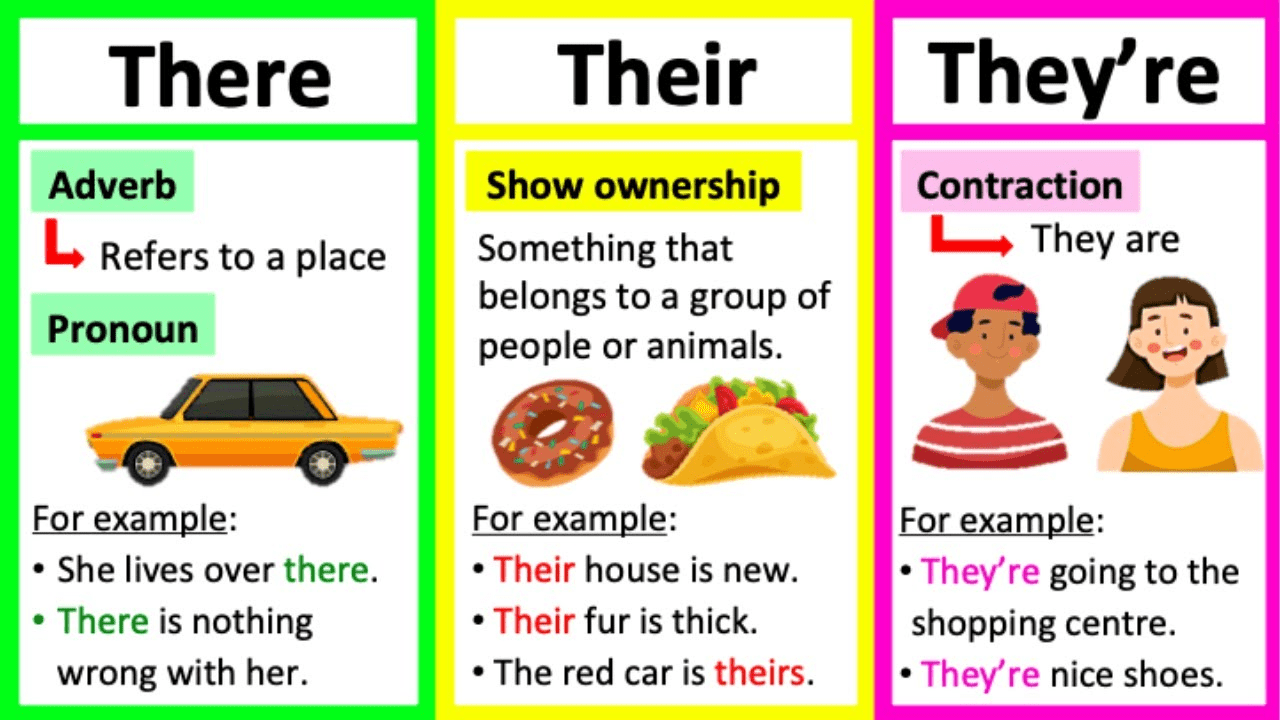
Homophones can be confusing, especially for English learners. One of the most common mistakes people make in writing is mixing up the words “their,” “there,” and “they’re.” These three words sound exactly the same, but they have different meanings and spellings. Let’s break them down clearly and simply!
What Are Homophones?
Homophones are words that sound the same but have different meanings, spellings, or both. In this case, their, there, and they’re all sound alike, but they’re used very differently in English sentences.
1. Their
“Their” is a possessive adjective. It shows that something belongs to them.
Meaning: Belonging to “them.”
Example Sentences:
- This is their house.
- They brought their books to class.
- Is that their dog in the yard?
2. There
“There” refers to a place or position. It can also be used to introduce a sentence or show existence.
Meaning: A location or to introduce a statement.
Example Sentences:
- The keys are over there on the table.
- There is a cat under the bed.
- There are many options to choose from.
3. They’re
“They’re” is a contraction of “they are.”
Meaning: They are.
Example Sentences:
- They’re going to the mall.
- I think they’re already here.
- They’re planning a big surprise for you!
Quick Comparison Table
| Word | Type | Meaning | Example |
|---|---|---|---|
| Their | Possessive adjective | Belonging to them | Their car is new. |
| There | Adverb/pronoun | Refers to place or existence | Put it over there. |
| They’re | Contraction | They are | They’re happy today. |
Memory Tricks to Remember
- Their has “heir” in it → something that someone owns.
- There has “here” in it → a place.
- They’re = They are. Try saying it out loud.
Why It’s Important to Use Them Correctly
Using the correct word shows that you understand grammar and spelling. Whether you're writing an email, taking an exam, or posting online, mixing these up can be embarrassing. Thankfully, it’s easy to fix once you know the difference.
Practice Sentences
- They’re going to their grandmother’s house, which is over there.
- There is no way they’re going to forget their homework again!
Conclusion
Their, there, and they’re may sound the same, but they mean completely different things. By understanding the meaning and using these words properly, you’ll avoid one of the most common mistakes in English writing and sound more fluent and confident!
FAQs
1. Why do “their,” “there,” and “they’re” sound the same?
They are homophones, meaning they have the same pronunciation but different meanings and spellings.
2. How can I remember which word to use?
Try using simple memory tricks: “their” for ownership, “there” for place, and “they’re” as “they are.”
3. Are these commonly tested in IELTS or TOEFL?
Yes! Understanding and using homophones correctly is important in both writing and speaking sections of these exams.
4. What happens if I use the wrong word?
Your sentence may become confusing or look unprofessional, especially in academic or business writing.
5. Is it okay to use “they’re” in formal writing?
Contractions like “they’re” can be used in informal writing. In formal writing, it's better to write “they are.”
Popular Posts

30 Nature Words You Should Know – Expand Your Environmental Vocabulary
Word Lists & Themes
100 Descriptive Adjectives for Writers to Enhance Storytelling
Word Lists & Themes
Top 20 Business English Words You’ll Hear in Meetings
Word Lists & Themes
Vocabulary for Emotions – Words Beyond “Happy” and “Sad”
Word Lists & Themes
50 Powerful English Words to Improve Your Vocabulary
Word Lists & Themes
Transitive vs. Intransitive Verbs – Simple Grammar Explanation
Grammar in Context